

My Journey into Sevens Rugby – Logical Advantage
My entrance into Sevens rugby began with a straightforward physiological profile of match play, requested by the late Chester Williams. Little did I realize that this would alter the course of my professional career entirely. By this time, I had been on my journey into Performance Analysis almost four years and despite collaborating with some of the country's top sports scientists, I still lacked a mentor in the sporting environment, which was also just about to change.
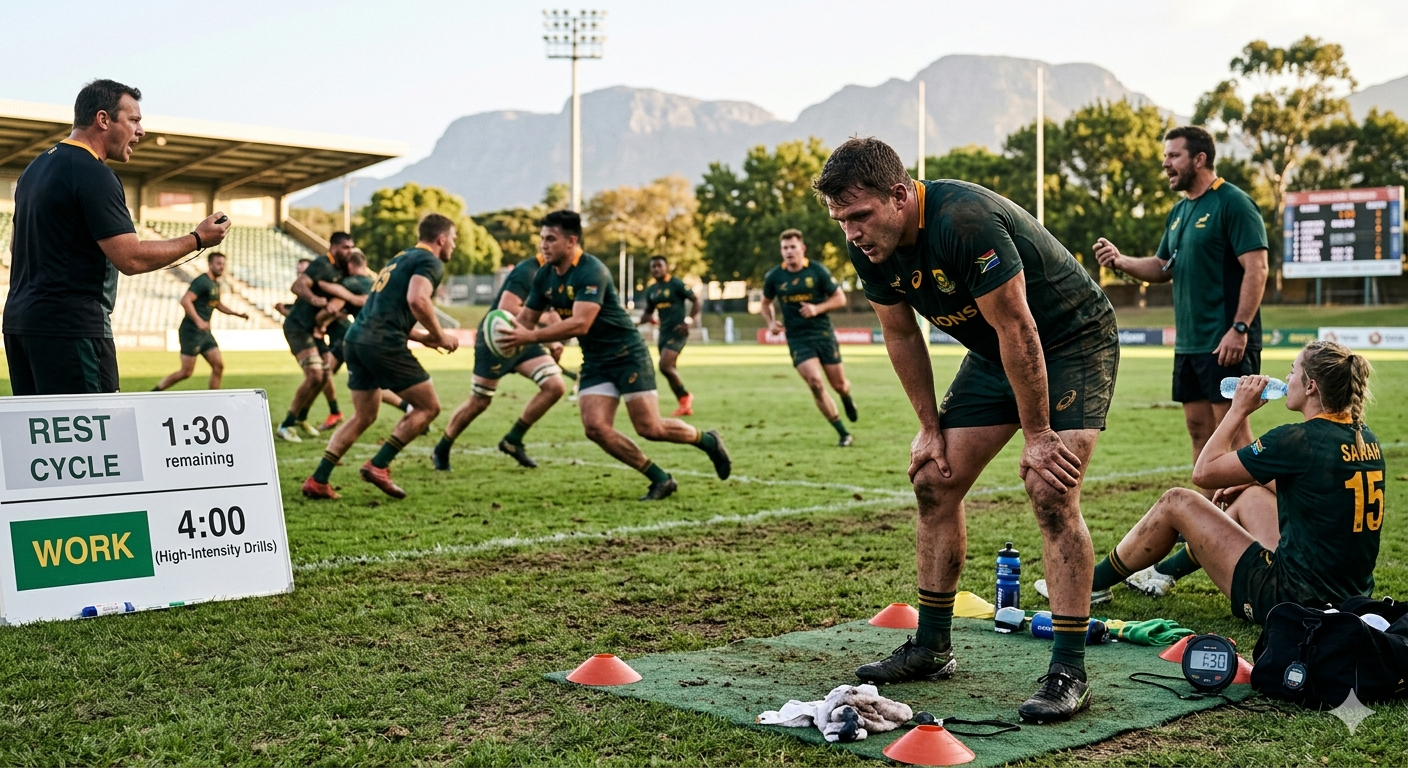
I can’t say for certain if this initial step into the world of Sevens caught the attention of the next coach, but something certainly did. I will always be thankful for the opportunities provided to me by Paul Treu. This journey encompassed much more than simply educating a new head coach on the benefits of analysis; in all honesty, I wasn’t entirely sure what I knew at the time, but I saw the value analysis could bring to others. However, it became a path of confronting imposter syndrome, building self-confidence and self-belief, and developing an adaptable mindset rooted in scientific inquiry. I found myself creating answers to questions I had never even considered before.
Essential Tools
How could I contribute with my minuscule knowledge of rugby but with my solid foundation in SportsCode. A phrase from my training resonated with me: “You are only limited by your imagination.”
This became crucial, as I naively believed anything was possible if I thought it through thoroughly. This marked the beginning of an exhilarating journey, where my default response became, “Yes, this can be done,” even though I had no real idea of how to accomplish it.
Logic Thinking
I began to form mental pathways that followed logical sequences—if this occurred, the outcome could be this or that. I focused on determining the most beneficial result and how performance could be leveraged to achieve it more frequently. This created knowledge networks based on simple logic rather than a deep understanding of the sport's complexities.
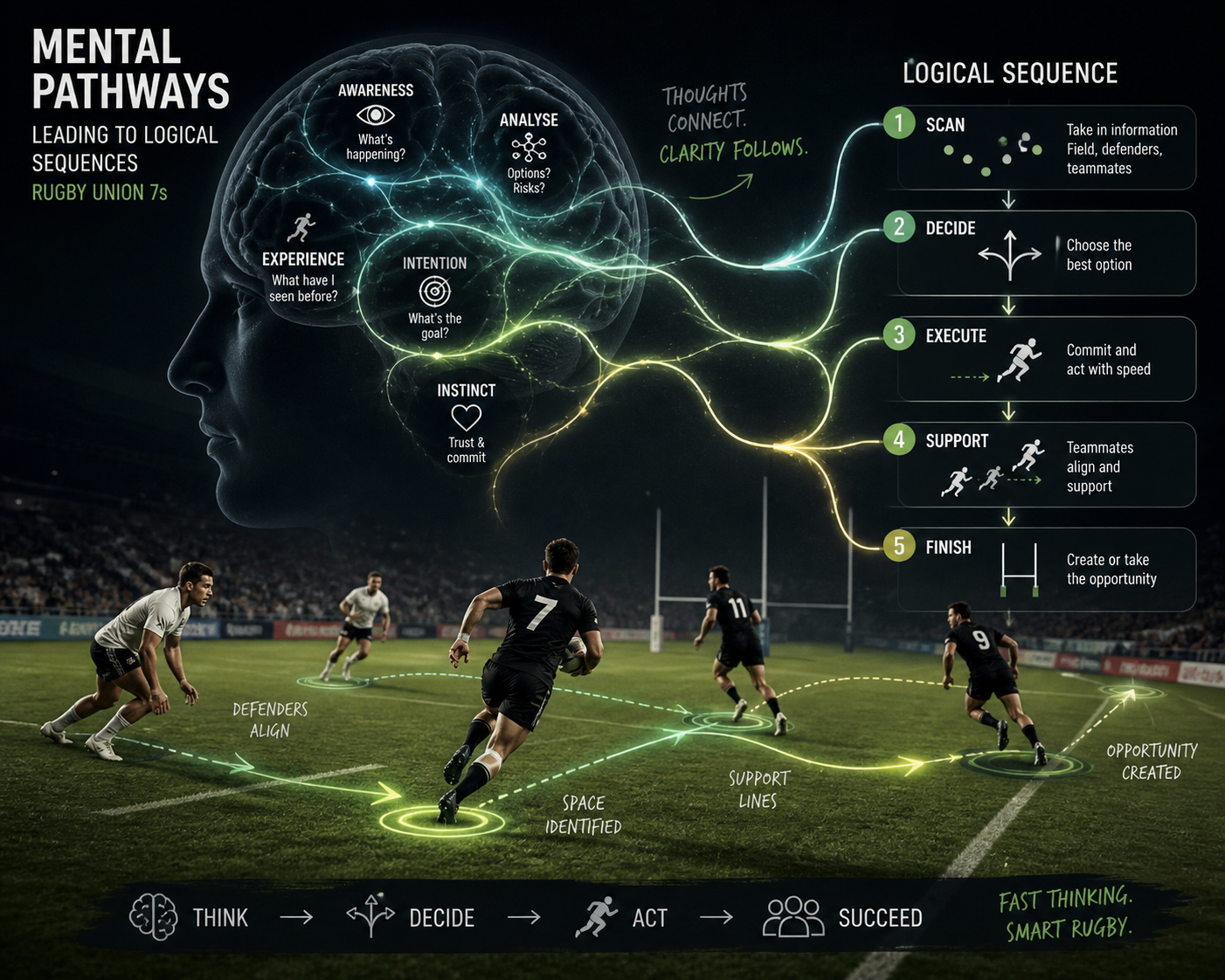
This process-oriented thinking has consistently benefited me by cutting through the noise of the questions being posed. It also led me to ask performance-related questions that were highly relevant to the sport, offering fresh insights that aligned with the coach’s desire to learn as much as possible about the game he was coaching.
Integrated Working Environment
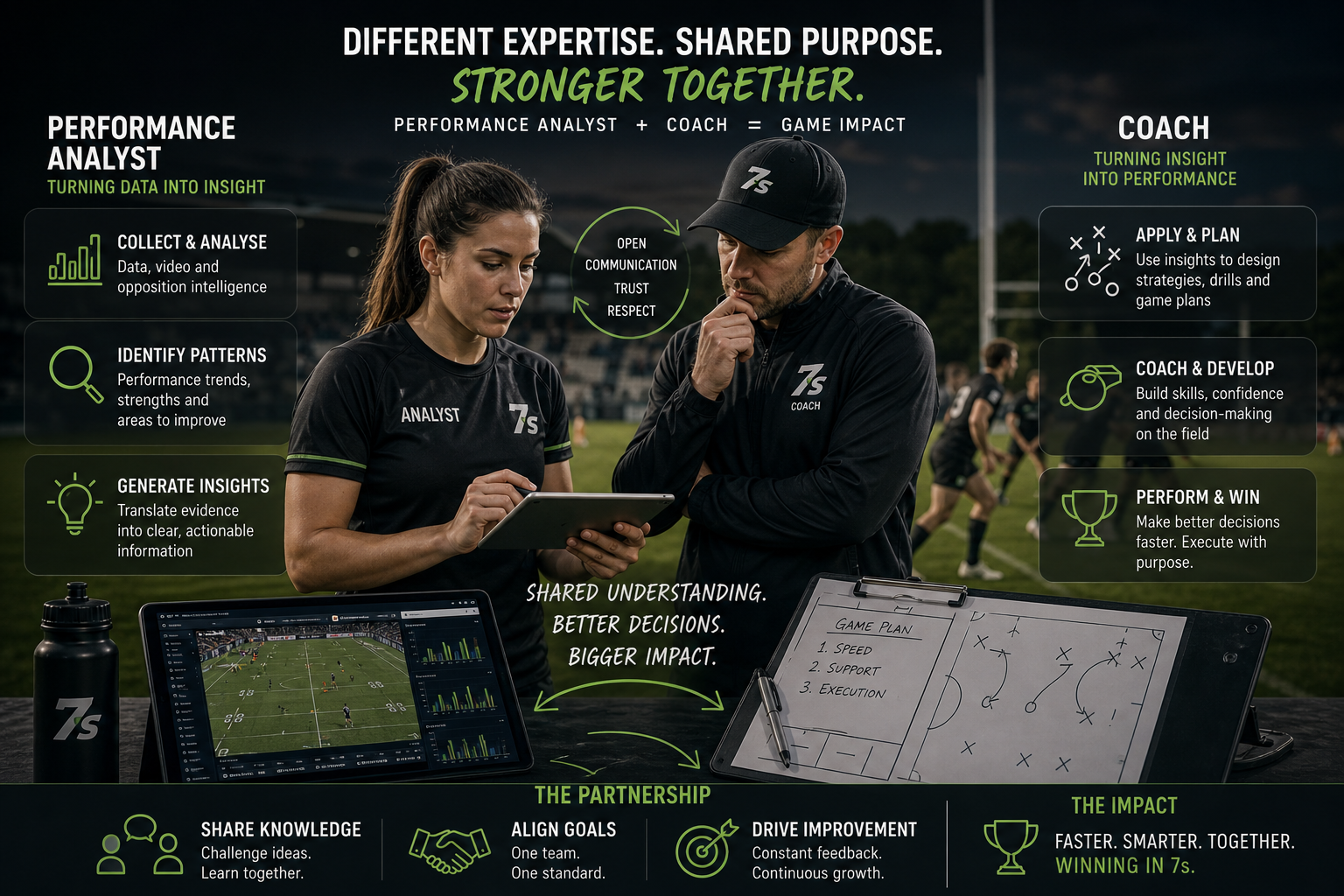
The first realization was that we were a partnership: I generated the data, which then transformed into information, while Paul’s role was to interpret this information within his coaching framework and translate it into the tactical and strategic language of the team. I would then pose questions about the information to refine our existing knowledge into new insights that could enhance the team's training and improve the execution of the coach’s plan. While it sounds straightforward, there was considerable trust placed in me by the coach, which was untested and unproven due to both my limited rugby knowledge and the scarcity of analysts with whom to exchange ideas.
This partnership flourished due to the speed with which the software allowed me to produce initial information. We truly put this to the test during international tournaments, which had previously provided teams with match footage only at the end of the day. For events with just one match per day, this could be acceptable. However, for competitions that require teams to play multiple matches in a single day—where outcomes dictate the next day’s opponents and points earned at the weekend—having quicker access to video footage would be invaluable for coaches.
The Big Test
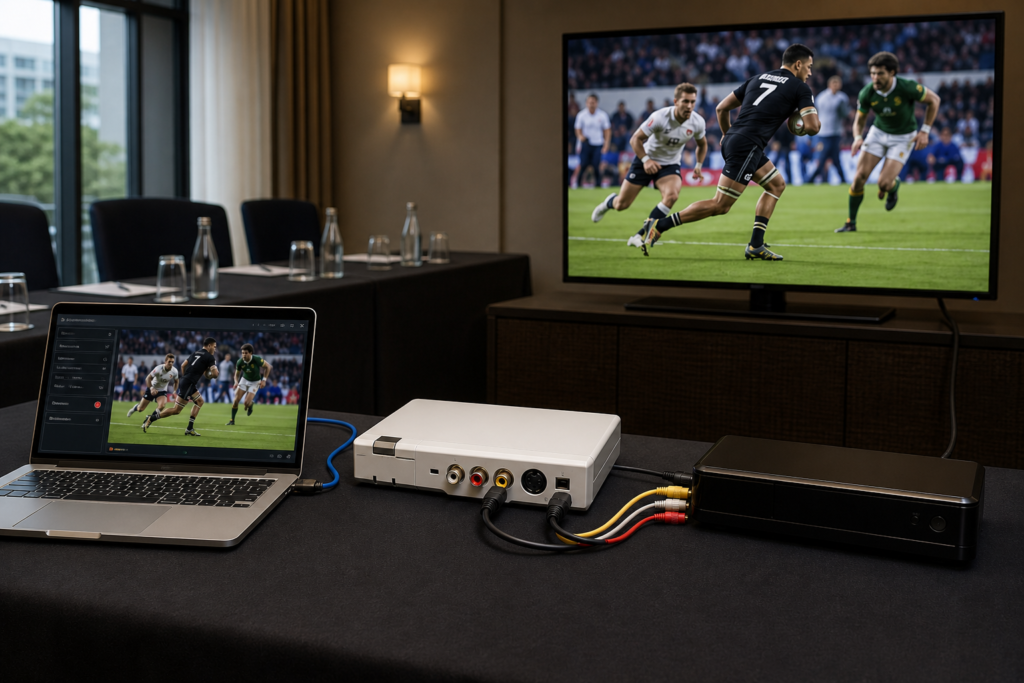
The first year served as an experiment to determine if providing ‘coded’ video footage to the coach and team within an hour of the final whistle would be beneficial. It’s worth noting that players must complete their media duties and post-match recovery processes before they can engage in any video feedback, contributing to a natural delay. However, since 2004 was experimental, we made use of the resources available, including a local hotel ‘team room’ to capture, code, and feedback the televised footage, which added to the post-match delay. Despite this lag time, this process still delivered video to the coach and team faster than the ‘official’ method. What a success! It provided exactly the information the coach was hoping for—now, how could we reduce the delay?